
Stop AI agents from going rogue.
ArmorIQ is the control fabric harness for autonomous agents, sitting between AI Agents and Governance Domains, intercepting plans, routing to the safest mix of agents and tools, and enforcing policy before a single action runs.
Trusted by security leaders from teams at






AI agents don't just generate text. They take actions.
Authenticated doesn't mean aligned. Your agents can have valid credentials and still act outside the task they were given. ArmorIQ sits between your Agents and Governance Domains, intercepting intent, enforcing policy, and ensuring every action belongs to an approved purpose.
Action Blocked
Outside task scope
How ArmorIQ works
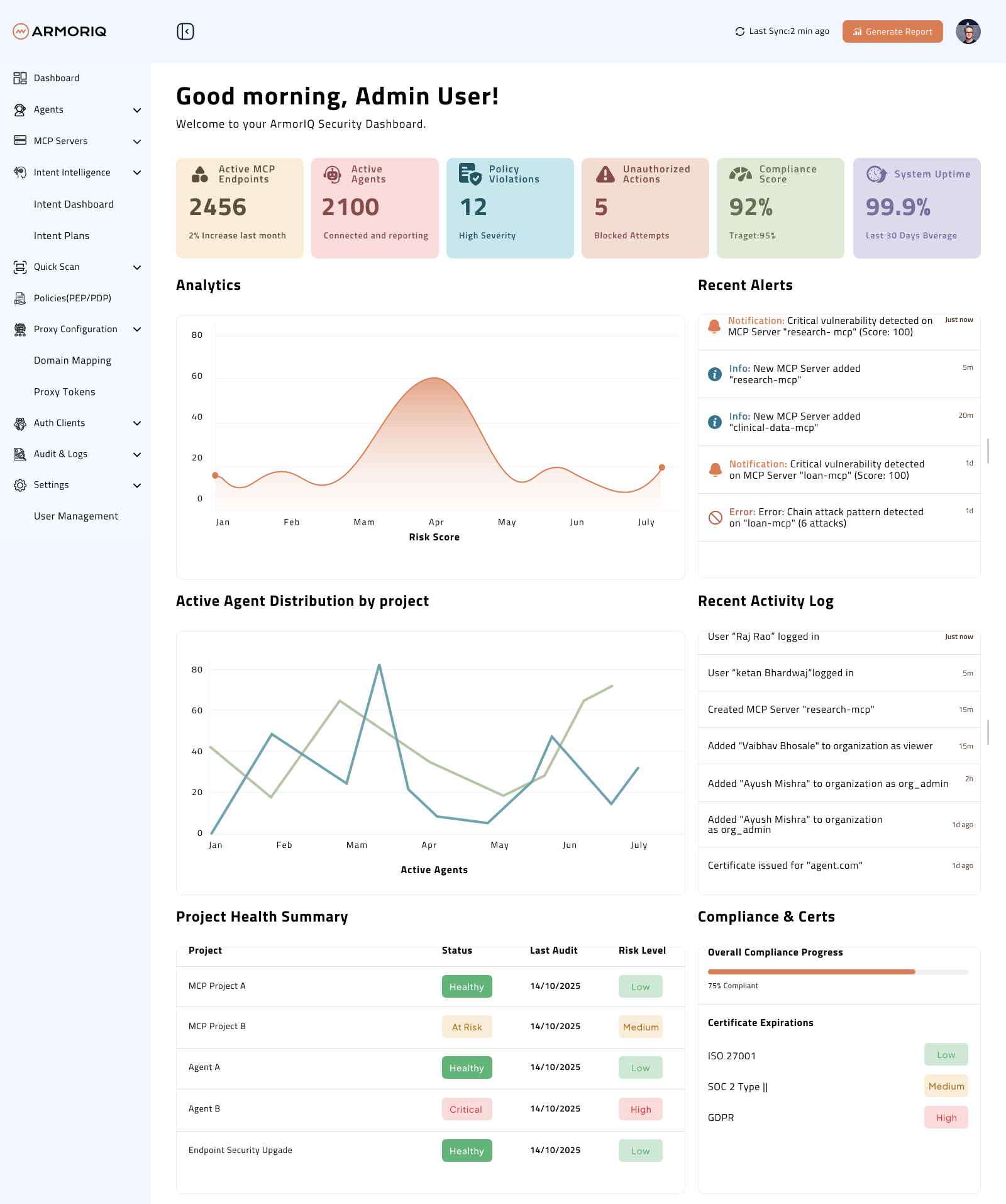
Add Agents to your registry & policy
Discover every agent and MCP server in your enterprise. Assign ownership. Define org-level policy. ArmorIQ gives you a complete, live system of record so governance starts before a single action runs.
Define and enforce Intent
Before any API call, data access, or workflow trigger executes, ArmorIQ checks it against declared intent and active policy. Within scope: allowed. Outside scope: blocked or down-scoped, instantly.
Generate Audit trails
Automatically captures a continuous, tamper-evident record of who did what, on whose behalf, and why. Compliance evidence is produced in real time, not assembled after an incident.
IAM controls access. ArmorIQ controls behavior.
One platform. Full control.
Everything you need to safely run AI agents in production.
Intent Engine
The brainDefine what your agents can do. Set boundaries. Enforce them automatically.
Sentry
The eyesSee every agent action in real time. Get alerts when agents approach their limits.
Gatekeeper
The guardControl which agents can access which resources. Like IAM, but for AI behavior.
Registry
The mapOne dashboard for all your agents. Know what's deployed, where, and what it can do.
Auditor
The recordAutomatic audit logs for every agent decision. SOC2, GDPR, and NIST ready.
ArmorClaw
open sourceIntent Assurance for OpenClaw agents. Cryptographic verification at every step.
Why not just use guardrails or IAM?
They solve different problems. ArmorIQ fills the gap none of them cover.
Guardrails stop bad responses. ArmorIQ stops bad actions.
Frequently Asked Questions
Everything you need to know about ArmorIQ
Intent is the "job description" for your AI agent. If a user asks an agent to "summarize my emails," the intent is email summarization, not accessing your calendar, not sending messages, not reading billing data. ArmorIQ enforces that boundary.
IAM controls who can access a resource. ArmorIQ controls what an agent does once it has access. An agent might have permission to read customer data, but should it read billing data when it was only asked for the customer's name? IAM says yes. ArmorIQ says no.
The action doesn't execute. The agent receives a clear explanation: "Action blocked: exceeds delegated authority." An audit log is created with full context. Your security team gets notified if you've configured alerts.
ArmorIQ sits between AI reasoning and execution. Agents plan and adapt freely, but before any action runs, ArmorIQ checks that it aligns with the approved task. It complements existing IAM, Zero Trust, and monitoring. It doesn't replace them.
Security teams, platform engineers, and compliance officers at companies running AI agents in production. If your agents can access data, call APIs, or trigger workflows autonomously, you need intent enforcement.
Ready to control what your AI agents actually do?
Join the teams building safer, compliant AI agent deployments.