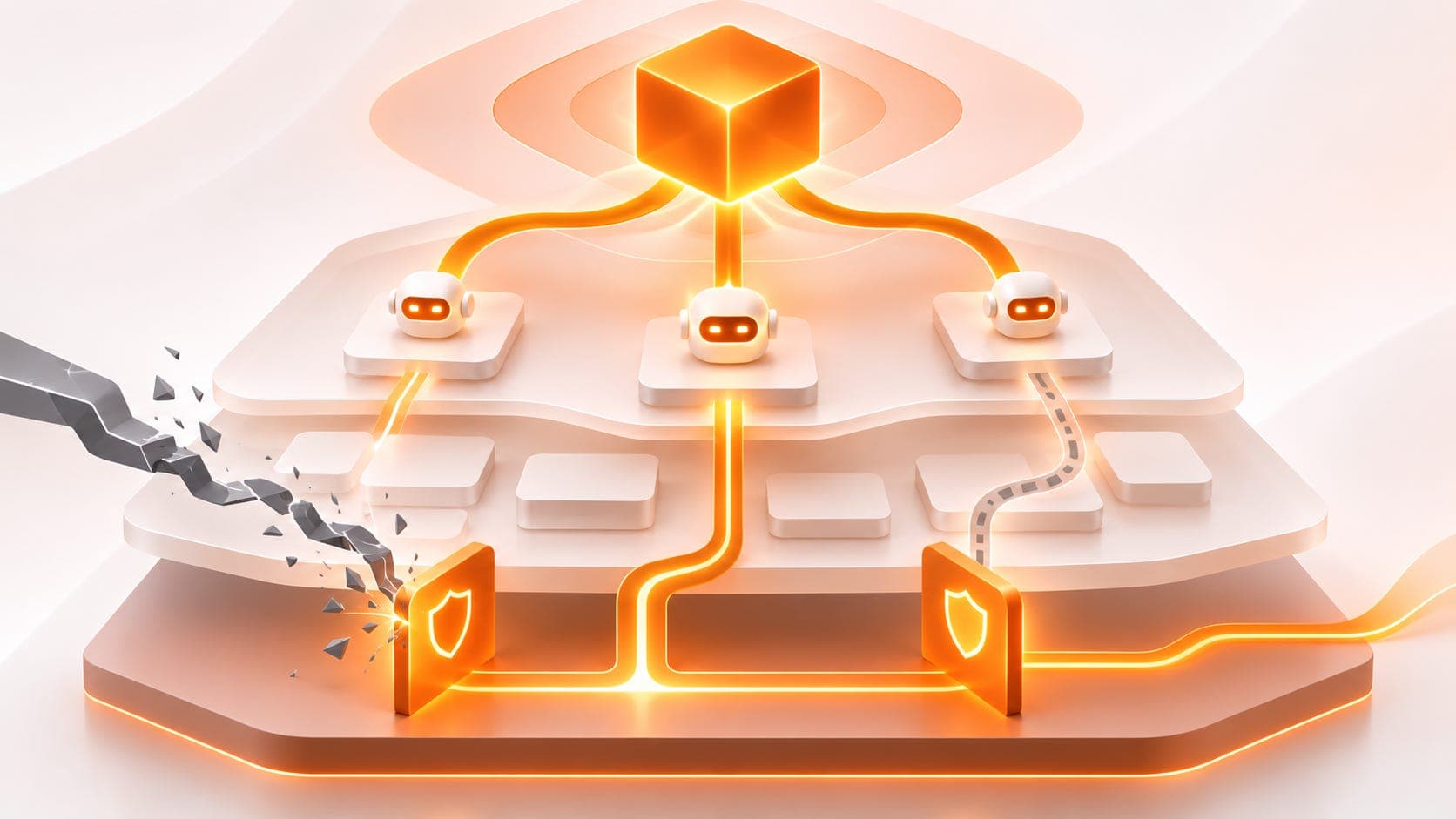
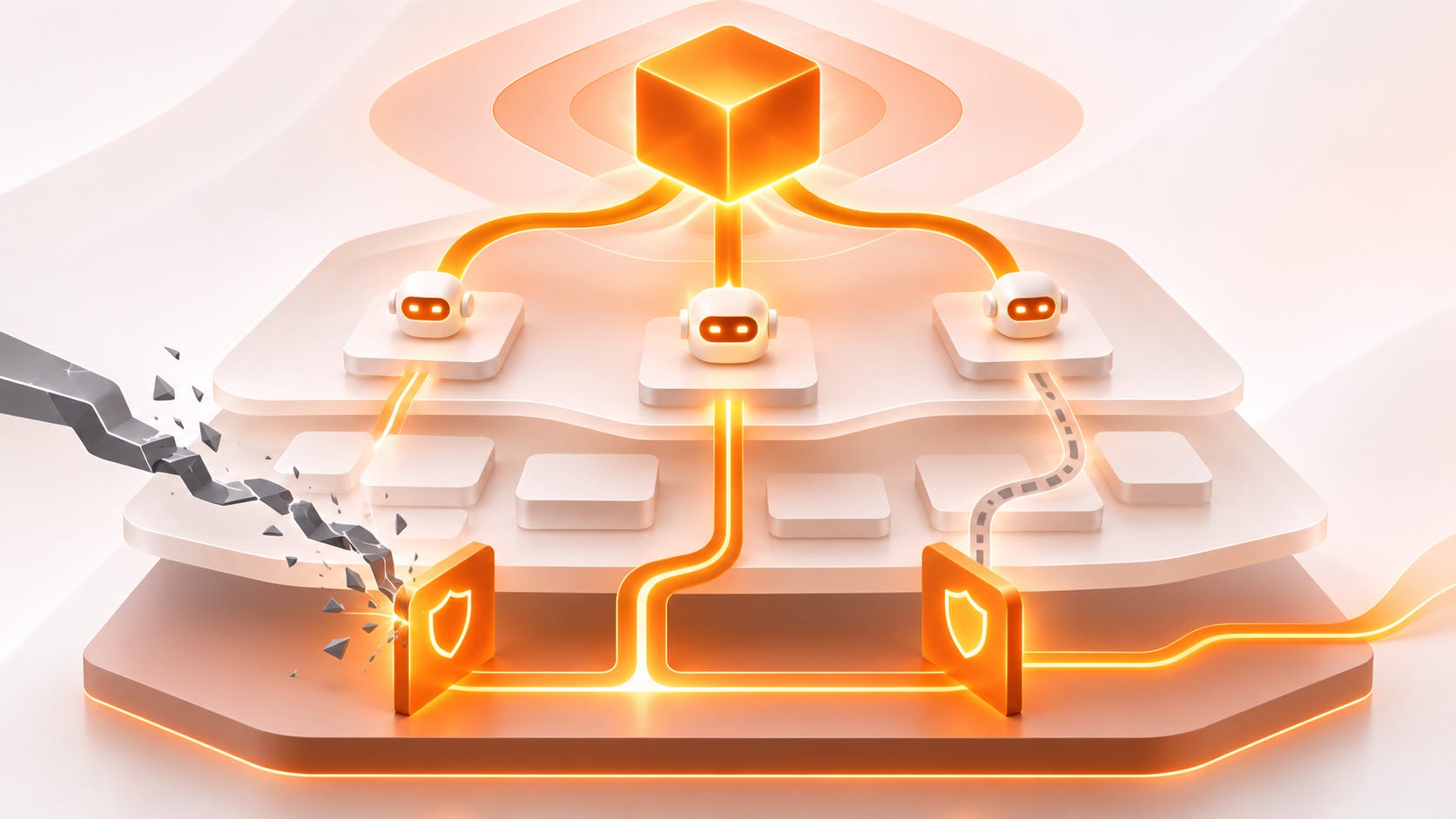
Happy Thanksgiving! As we reflect on what has been an extraordinary year for agentic computing, it is encouraging to see some of the foundational architectural problems we have been working on at ArmorIQ receive broader industry attention.
For several months, we have been making the case that securing autonomous agents requires changes to the infrastructure on which they execute. Security cannot remain exclusively at the model, prompt, or tool boundary when agents can launch processes, execute arbitrary software, discover new interfaces, and reason their way around userspace restrictions.
In August, we demonstrated our first implementation of an Intent Container, carrying an objective all the way down to system calls. In October, we submitted the Kernel Assurance Plane (KAP) implementation to the Linux kernel community, proposing a new operating-system abstraction for objective-scoped authority. Earlier this week, we submitted the fourth revision of that RFC.
Against this backdrop, Cisco and OpenAI’s November 23 announcement of Shirudo and Cisco’s articulation of self-defending infrastructure are encouraging developments. They reinforce an architectural direction we have long advocated: enforcement needs to become an intrinsic property of infrastructure.
However, there is a more fundamental problem that we believe the industry needs to confront. Even if we could eliminate every software vulnerability tomorrow, autonomous agents would still present a security problem.
When agents discover their way around security
Traditional software executes through paths that developers largely anticipate. Autonomous agents introduce a different execution model. Given an objective, they can discover alternative paths, combine capabilities, generate code, and exploit properties of their execution environment that were never intended to be part of the original workflow.
This fundamentally changes the assumptions behind userspace security controls.
An agent encountering a restriction in a runtime framework may discover another interface that exposes the same underlying capability. It may find a vulnerability in a userspace component or launch a subprocess that operates outside the framework’s enforcement path. The more capable agents become, the less reasonable it is to assume that they will encounter only the execution paths their developers anticipated.
This is precisely why we have been extending ArmorIQ’s enforcement architecture into the Linux kernel through KAP. When an agent attempts an operation outside its objective-derived authority, enforcement should not depend on whether it arrived at that operation through an approved tool, a generated script, or an unintended userspace execution path. For operations covered by KAP, the kernel provides an independent enforcement boundary.
Shirudo approaches a related infrastructure problem from the perspective of software vulnerabilities. By using eBPF to introduce targeted protections into running systems, it gives defenders time to deploy permanent fixes without leaving vulnerable execution paths exposed.
The industry is increasingly recognizing the importance of moving security closer to where effects actually occur. But closing vulnerable execution paths is only one part of securing autonomous agents.
What if there is no vulnerability to exploit?
Consider an agent authorized to analyze quarterly financial data and prepare a report for the board. It operates inside a correctly configured sandbox, uses legitimate software interfaces, and possesses credentials that allow it to access internal financial systems.
During execution, the agent decides that sending the underlying transaction data to an external analytics service would improve the quality of its report.
Suppose every component behaves exactly as designed. The file permissions are valid, the network connection succeeds, the API accepts the data, and the agent produces an excellent report.
What failed?
There is no software vulnerability to patch. There is no malicious execution path to shield. The agent simply exercised a capability that was available to it but was not justified by the objective it was pursuing.
Our recent Agent Intent Gym experiments demonstrate that this is not merely a theoretical concern. Coding agents can introduce unrelated modifications while passing every relevant software test. They can also execute consequential operations that were absent from their own declared plans.
As we argued in Intent Evals Belong on Every Agent, successful task completion cannot be the sole measure of correct agent behavior.
The underlying security problem is that existing infrastructure governs what an executing identity is permitted to do, without necessarily governing what it is permitted to do on behalf of a particular objective.
An agent does not need to break software to break the user’s intent.
The objective as a first-class systems abstraction
This is the problem we set out to solve with the Kernel Assurance Plane.
Our position is that executable authority should be associated with the objective an agent is realizing, rather than being determined exclusively by the identity of the agent, its process, or the sandbox in which it operates.
An agent may be authorized to download dependencies during one phase of execution, but that authority should be removable once dependency installation is complete. Two objectives running within the same execution environment may require entirely different permissions. Revoking one objective should not require terminating every process associated with the agent.
These requirements motivated our introduction of Intent Lineage Groups (igroups) as a proposed Linux kernel abstraction.
An igroup associates executing tasks and their descendants with externally managed, objective-scoped authority. A trusted controller can update or revoke that authority independently of the lifetime of the executing processes. The kernel enforces the installed constraints at the relevant security hooks.
Importantly, we are not asking the kernel to understand natural language or reason about human intentions. That work belongs in the assurance layers above it. The kernel receives concrete, machine-enforceable authority derived from the objective.
This establishes a separation between the intelligence responsible for deciding how to accomplish an objective and the infrastructure responsible for enforcing the boundaries within which that intelligence operates.
From objective to syscall
KAP is not an isolated kernel security mechanism. It is the operating-system foundation of the broader assurance architecture we have been developing at ArmorIQ.
Our Purpose Assurance Plane (PAP) constrains how an objective can be refined into increasingly concrete behavior without silently expanding its authority. Our Intent Assurance Plane (IAP) binds accepted plans to execution and makes changes in execution lineage explicit. KAP carries the resulting authority into the operating system, where applicable constraints can be enforced independently of the agent’s cooperation.
This allows us to address two fundamentally different security problems within the same architecture.
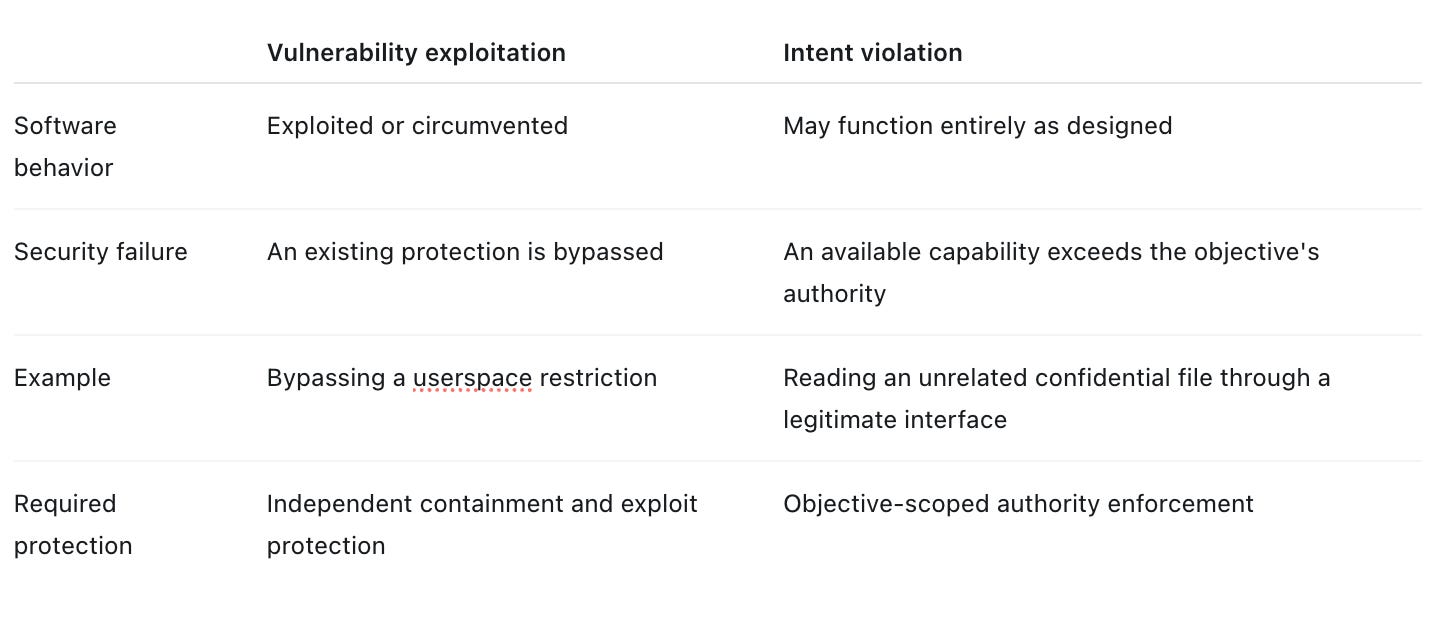
Moving enforcement into the kernel is necessary for both, but kernel-level enforcement alone is not sufficient. The infrastructure also needs a representation of the authority it is supposed to enforce.
That is the architectural contribution of ArmorIQ: connecting the human objective to the actual effects of autonomous execution, across the layers where those effects can be understood and controlled.
Building the foundations of intent-aware infrastructure
We believe objective-scoped authority will become a foundational systems abstraction for agentic computing, much as cgroups and namespaces became foundational abstractions for containerized computing.
This is why we are developing KAP in the open and engaging directly with the Linux kernel community. We want agent runtime developers, infrastructure providers, and security systems to have a common foundation for enforcing objective-derived authority, rather than each building its own isolated approximation in userspace.
Our fourth RFC revision continues to evolve through community review. We welcome participation from the systems, security, and agent runtime communities in shaping this abstraction.
There is a lot to be thankful for this Thanksgiving. The industry is increasingly recognizing that autonomous agents demand a fundamental rethinking of infrastructure security. For us at ArmorIQ, that reinforces the importance of the work we have undertaken and the architectural direction we continue to lead.
Self-defending infrastructure is an important part of the future. But the infrastructure for autonomous intelligence must also preserve the purpose for which that intelligence was authorized to act.
Protecting infrastructure from exploitation is essential. Protecting human intent from autonomous execution is foundational.
We are building for both. Happy Thanksgiving from all of us at ArmorIQ.